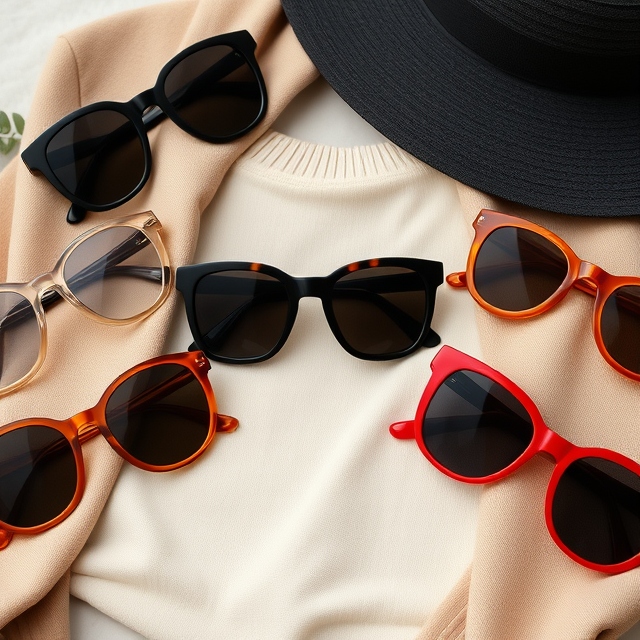
Sunglasses color can change the character of an outfit almost as much as the frame shape itself. A black frame may create a sharp, classic appearance, while tortoise can feel warmer and more traditional. Transparent frames often look lighter, whereas brighter colors can turn sunglasses into a noticeable statement accessory.
The right color is not simply a matter of choosing your favorite shade. Consider the clothes you normally wear, the visual effect you want, the frame shape, and whether you want your sunglasses to blend into an outfit or become its focal point.
Why Does Sunglasses Color Matter?
Sunglasses sit directly on the face, so their color is naturally noticeable. Because of that position, even a small change in frame color can affect how the entire outfit is perceived.
Color can influence three main things:
- Visual weight: Dark shades often create a stronger outline around the face.
- Mood: Warm browns and tortoise patterns can create a relaxed or classic impression, while brighter shades can feel more expressive.
- Coordination: Neutral frames tend to work across many outfits, while distinctive colors may work best when intentionally coordinated.
The same frame shape can therefore produce very different results simply by changing its color.
Classic Sunglasses Colors for Everyday Wear
If you want sunglasses that work with a wide range of clothing, neutral colors are usually an easy starting point.
Black
Black sunglasses create a strong, defined outline. They pair naturally with casual clothing, monochrome outfits, denim, tailored pieces, and many streetwear looks.
A black frame can also make a retro silhouette feel more structured and contemporary.
Brown
Brown generally creates a softer visual effect than solid black. It works naturally with beige, cream, tan, olive, denim, and other earthy colors.
Brown can be particularly useful when you want a classic appearance without the stronger contrast of black.
Tortoise
Tortoise patterns combine multiple warm tones, giving the frame more visual texture than a single-color design. Because the pattern can contain brown, amber, black, or honey-like tones, tortoise sunglasses can coordinate with a surprisingly broad range of clothing.
They can also complement vintage-inspired frame shapes particularly well.
Transparent
Transparent or translucent frames have a lighter visual presence. They can be useful when you like a statement shape but do not want a dark frame to dominate your face.
Transparent frames can work especially well with modern casual outfits and clean, minimal styling.
When Should You Choose a Bold Sunglasses Color?
Bold colors make sense when you want your sunglasses to become part of the outfit’s visual statement.
Orange, red, yellow, blue, green, and other distinctive shades can add personality to a simple outfit. For example, a neutral shirt and trousers can provide a relatively understated background for a colorful pair of sunglasses.
However, a bold frame does not need to match every other item exactly. Often, coordination works better than exact color matching. A small color detail in a shirt, bag, shoes, or accessory can provide enough visual connection.
How Frame Shape and Color Work Together
Color should never be considered separately from shape.
A large square frame in black can look dramatically different from the same shape in transparent or light-colored acetate. Similarly, a small round frame in a dark shade may feel more defined, while a lighter color can make the same silhouette appear less visually dominant.
When exploring a retro sunglasses collection, compare color and shape together rather than selecting a shade before considering the frame’s proportions.
For example:
- Oversized frames + dark colors: Strong and attention-grabbing.
- Oversized frames + transparent colors: Bold shape with a lighter visual effect.
- Round frames + tortoise: Classic and vintage-inspired.
- Slim geometric frames + neutral colors: Structured and understated.
- Bright frames + simple shapes: A controlled way to introduce color.
These are style directions rather than strict rules, so personal preference remains important.
Should Sunglasses Match Your Clothes?
Sunglasses do not have to match your clothes exactly. In many cases, coordination creates a more natural outfit than trying to make every color identical.
Suppose you are wearing a beige shirt, blue jeans, and brown shoes. Brown or tortoise sunglasses could reinforce the warm tones, but black sunglasses could also introduce stronger contrast.
Likewise, if your outfit is mostly black and white, a red or orange frame could become the main accent without needing another red or orange item elsewhere.
The goal is visual balance rather than perfect color duplication.
Consider Your Existing Wardrobe
One practical way to choose sunglasses color is to look at what you already wear most often.
If your wardrobe contains many neutral colors, you can choose either another neutral frame or introduce a stronger accent. If your clothing already includes several bright colors and patterns, a simpler frame may create more balance.
Ask yourself:
- Do I mostly wear black, white, grey, or denim?
- Do I regularly wear earth tones such as brown, beige, and olive?
- Do I prefer colorful or understated accessories?
- Do I want one everyday pair or several options for different outfits?
Your answers can help narrow down the color palette without limiting your choices unnecessarily.
Does Skin Tone Determine Sunglasses Color?
Skin tone can be considered when choosing eyewear, but it does not have to determine the decision.
Warm browns, amber tones, tortoise patterns, and certain earthy shades may complement warm color palettes. Cooler colors such as blue, grey, or some transparent finishes may create a different contrast.
Still, personal style and wardrobe coordination are equally important. A color that technically contrasts with your complexion may be exactly what you want if the goal is a bold fashion statement.
What About Lens Color?
Frame color and lens color are separate choices, although they interact visually.
A dark frame with dark lenses can create a strong, unified appearance. A lighter frame with tinted lenses can feel more playful or fashion-forward. Neutral frame colors can also allow unusual lens tints to become the main visual feature.
When evaluating a pair, look at the complete combination rather than judging the frame color by itself.
How to Choose Sunglasses Color for Different Occasions
For everyday wear, versatile shades such as black, brown, tortoise, grey, or transparent can be easier to coordinate with different outfits.
For travel, events, or fashion-focused occasions, stronger colors can provide more personality. A colorful frame can also refresh a simple outfit without requiring a completely different wardrobe.
If you are buying your first pair of statement sunglasses, consider choosing a shape you already like and changing the color rather than experimenting with several unfamiliar design elements at once.
A Simple Sunglasses Color Guide
If you are unsure where to start, consider these general directions:
- Black: defined, classic, and versatile.
- Brown: warm, relaxed, and understated.
- Tortoise: textured, classic, and vintage-inspired.
- Transparent: light, modern, and subtle.
- Grey: neutral and restrained.
- Blue or green: colorful without necessarily becoming extremely bold.
- Orange or red: expressive and attention-grabbing.
- Yellow: playful and distinctive.
The best sunglasses color is ultimately the one that fits your preferred visual style while working naturally with your wardrobe.
Making Color Part of Your Signature Style
Sunglasses can become a consistent part of personal style when color is chosen intentionally. Some people prefer a dependable black or tortoise frame that works with almost everything. Others use sunglasses to introduce a new color into otherwise simple outfits.
There is no requirement to follow one palette permanently. Understanding how different shades affect contrast, visual weight, and coordination simply gives you more control over the final look. Once you know the effect you want, choosing sunglasses becomes less about finding a universally correct color and more about selecting the shade that supports your individual style.