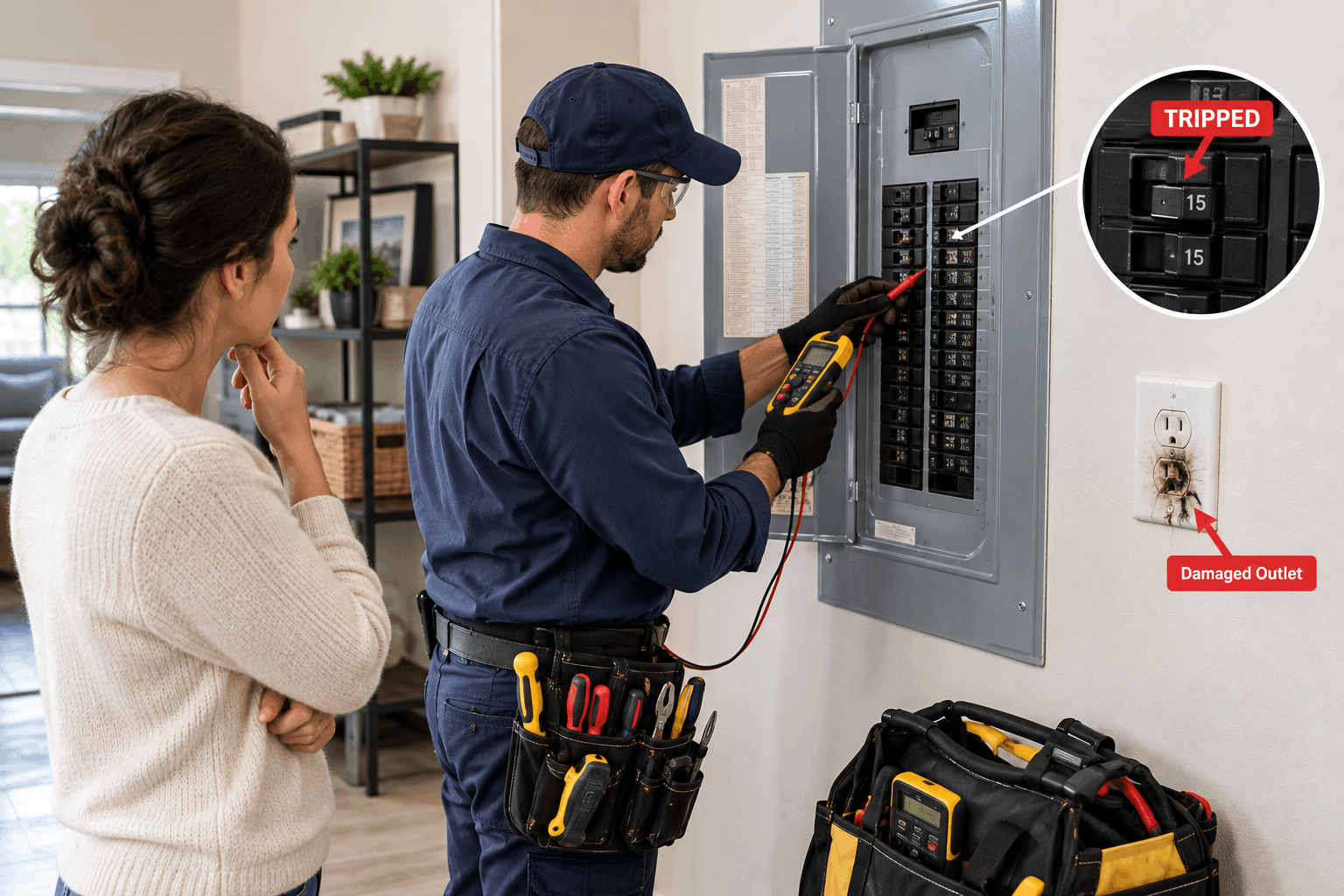
Electrical problems at home should be left to a qualified technician when they involve wiring, repeated circuit breaker trips, damaged or overheating sockets, electrical panels, persistent power faults, or any situation where the cause is unclear. Simple observations can help identify the symptoms, but opening electrical components or experimenting with wiring can introduce unnecessary risk.
Knowing the difference between a minor user-level check and a technical electrical fault helps homeowners respond appropriately. The goal is not to diagnose every problem yourself, but to recognize when professional electrical expertise is needed.
Which Electrical Problems at Home Need Professional Attention?
A qualified electrician or electrical technician should assess faults involving fixed electrical systems or components that require technical inspection.
Common examples include:
- Circuit breakers that repeatedly trip
- Sockets or switches that become unusually warm
- Visible damage to electrical outlets
- Burning smells associated with electrical components
- Lights that repeatedly flicker without an obvious explanation
- Power loss affecting part of the property
- Damaged wiring or exposed conductors
- Electrical faults that keep returning after a reset
- Problems involving the distribution board or electrical panel
These symptoms do not all have the same cause. However, they share one important characteristic: determining the underlying problem may require electrical testing and technical knowledge.
Why Does a Circuit Breaker Keep Tripping?
A circuit breaker is designed to interrupt a circuit under certain abnormal electrical conditions. If a breaker trips once, the immediate circumstances may provide useful clues.
If it repeatedly trips, however, simply resetting it over and over does not identify or correct the underlying issue.
The problem could relate to the circuit, connected equipment, or another electrical fault. Without proper testing, a homeowner may not be able to determine which factor is responsible.
Make a note of what was operating when the breaker tripped and whether the same circuit is affected each time. This information can help a technician investigate the fault more efficiently.
When Is a Damaged Socket More Than a Cosmetic Problem?
A loose faceplate or superficial mark may appear minor, but certain socket symptoms deserve more caution.
Stop using a socket and arrange appropriate inspection if you notice signs such as unusual heat, burning smells, visible scorching, cracking around electrical components, sparking, or persistent loss of power.
Do not remove the socket or open the wiring simply to see what is happening behind it.
The visible condition may not reveal the full extent of the electrical problem, and technical inspection is more appropriate when the component itself may be faulty.
What About Flickering Lights?
An occasional change in lighting does not automatically identify a wiring fault. The useful question is whether the behavior is persistent, widespread, or connected with other electrical symptoms.
For example, note whether one light is affected or several rooms experience the same problem. Also observe whether the flickering begins when particular equipment operates.
This does not diagnose the fault, but it provides useful context.
If lighting problems repeatedly return, affect multiple areas, or occur alongside breaker trips, unusual smells, heat, or other electrical abnormalities, professional assessment is sensible.
Electrician or Handyman: Who Should Handle the Problem?
A handyman may be suitable for many general household tasks, but technical electrical work is a different category.
Jobs involving fixed wiring, electrical panels, circuit faults, or technical electrical diagnosis should be directed to someone appropriately qualified for that work.
This distinction becomes particularly important when a household has several unrelated maintenance needs. A loose cabinet hinge and an electrical fault might appear on the same repair list, but they should not automatically be assigned to the same type of worker.
When the issue clearly requires technical expertise, residents can use professional home services to connect their repair requirement with an appropriate service category rather than treating every household problem as a general handyman job.
What Should You Tell an Electrical Technician?
A useful service request focuses on symptoms rather than an unconfirmed diagnosis.
Instead of saying, “The house needs rewiring,” when the cause is unknown, explain exactly what you have observed.
Useful details can include:
- Which room or circuit appears affected
- When the problem started
- Whether the fault is constant or intermittent
- How often a breaker trips
- Whether a particular appliance was operating
- Whether sockets or switches feel unusually warm
- Whether you noticed a smell, sound, or visible damage
- Whether other parts of the property still have power
Clear information helps the technician understand the nature and urgency of the problem before inspection.
Should You Keep Resetting a Tripped Breaker?
Repeated resetting is not a substitute for diagnosis.
If a breaker trips again after being reset, particularly under similar conditions, treat the recurrence as information that something requires attention.
Avoid repeatedly forcing the circuit back into operation without understanding why the protective device is activating.
Likewise, do not bypass protective devices or make temporary wiring modifications in an attempt to keep a circuit operating.
A technician can investigate the circuit and determine what is causing the repeated interruption.
When Should You Stop Troubleshooting Yourself?
Homeowner troubleshooting should remain limited to safe observations and simple user-level checks.
You can identify which areas have lost power, note when a problem occurs, check whether an appliance appears connected with the symptom, and record visible warning signs without opening electrical systems.
You should step away from DIY troubleshooting when the task would require:
- Opening fixed electrical components
- Handling wiring
- Working inside an electrical panel
- Testing live circuits
- Replacing technical electrical components without suitable expertise
- Bypassing a breaker or another protective device
If you are uncertain whether a task involves technical electrical work, taking the cautious approach and arranging qualified assessment is preferable to experimenting.
Why Recurring Electrical Faults Should Not Be Ignored
A recurring fault is different from a one-time inconvenience.
If a breaker repeatedly trips, a socket continues losing power, or lights keep behaving abnormally, the repetition itself is useful evidence. Something is causing the electrical system to behave differently from normal operation.
Simply restoring power does not necessarily address that cause.
Keep a short record of when the fault happens and what was operating at the time. This can make patterns easier to describe when professional diagnosis is arranged.
Use the Right Professional for Electrical Work
Household electrical systems contain components where incorrect repairs can create additional problems. For that reason, the safest role for a homeowner is often to recognize symptoms, avoid unnecessary interaction with faulty components, and provide accurate information to an appropriate technician.
Repeated breaker trips, damaged sockets, suspected wiring faults, overheating components, and unexplained electrical failures are all strong reasons to move beyond basic observation.
A qualified technician can inspect the relevant electrical system, identify the cause, and determine what corrective work is appropriate. Knowing when to hand over the problem is an important part of responsible home maintenance.